When Should You Start Physiotherapy After Surgery? A Post-Op Guide
Waking up from surgery, most people have one question on their mind: when can I start moving again? It’s a fair thing to wonder.
You’ve been told rest is important, yet you’ve probably also heard that appropriate movement can be part of recovery. Understanding when and how to introduce movement is an important part of the rehabilitation process.
This guide explains when post-operative rehabilitation may begin, what the different stages can involve and why the right timing depends on the type of surgery, your recovery and your healthcare team’s recommendations.
When Can Physiotherapy Begin After Surgery?
For some procedures, rehabilitation or early mobilization may begin within the first day or two after surgery and in some cases, movement may begin on the day of surgery. However, the appropriate timing varies significantly depending on the procedure, your surgeon’s or healthcare team’s instructions and your individual recovery.
Starting early doesn’t mean loading the joint or pushing through pain. Depending on the procedure, early rehabilitation may involve simple movements such as ankle pumps, breathing exercises or carefully getting in and out of bed. The appropriate starting point depends on your procedure, your surgeon’s protocol and how your body is responding.
Why Timing Matters So Much
After surgery, the body needs time to heal, while appropriate movement may also become an important part of recovery. Depending on the procedure, periods of reduced activity can contribute to stiffness, reduced strength or difficulty returning to normal movement.
A carefully planned post-operative rehabilitation program is designed to support recovery while respecting the healing requirements of the procedure. Appropriately timed rehabilitation may help:
- Keep joints mobile before stiffness sets in
- Maintain muscle activation and support the gradual rebuilding of strength
- Support appropriate movement and circulation during recovery
- Rebuild confidence in movement, which many people underestimate
Progressing too quickly may place inappropriate demands on healing tissues, while prolonged inactivity can contribute to stiffness and reduced strength.
The appropriate balance depends on the procedure and your rehabilitation plan. Effective rehabilitation therefore involves finding the right balance between protecting healing tissues and gradually restoring movement and function.
The Stages of Post-Operative Rehabilitation
While every rehabilitation plan is different, recovery may broadly progress from protecting the surgical area to restoring movement, rebuilding strength and gradually returning to everyday or higher-level activities.
Stage 1: Protection and Early Movement
Early rehabilitation focuses on protecting the surgical area while introducing safe, controlled movement as advised by the treating team. Depending on the procedure, this may involve gentle range-of-motion exercises, swelling management, guidance on using crutches or a sling and advice on positioning or sleeping .
Stage 2: Restoring Movement and Beginning Strength
As recovery progresses, rehabilitation may focus increasingly on restoring range of motion and rebuilding muscle activation and strength where appropriate. Exercises become slightly more demanding, though still carefully controlled.
Stage 3: Building Strength and Function
As healing progresses and your healthcare team confirms that increased activity is appropriate, rehabilitation may place greater emphasis on strength, stability and everyday function.
Stage 4: Returning to Activity and Sport
For more active goals, the final stage may target sport-specific movement, balance and confidence as activity demands gradually increase . The timing of this stage can vary considerably depending on the procedure, individual recovery and activity goals.
Recovery does not follow the same timeline for everyone. Your progression depends on the procedure, your individual recovery and the recommendations of your healthcare team. Think of these stages as a general picture of rehabilitation rather than a fixed schedule.
Does Rehab Timing Change by Surgery Type?
Yes, and it can vary significantly depending on the type of surgery, the procedure performed and your recovery.
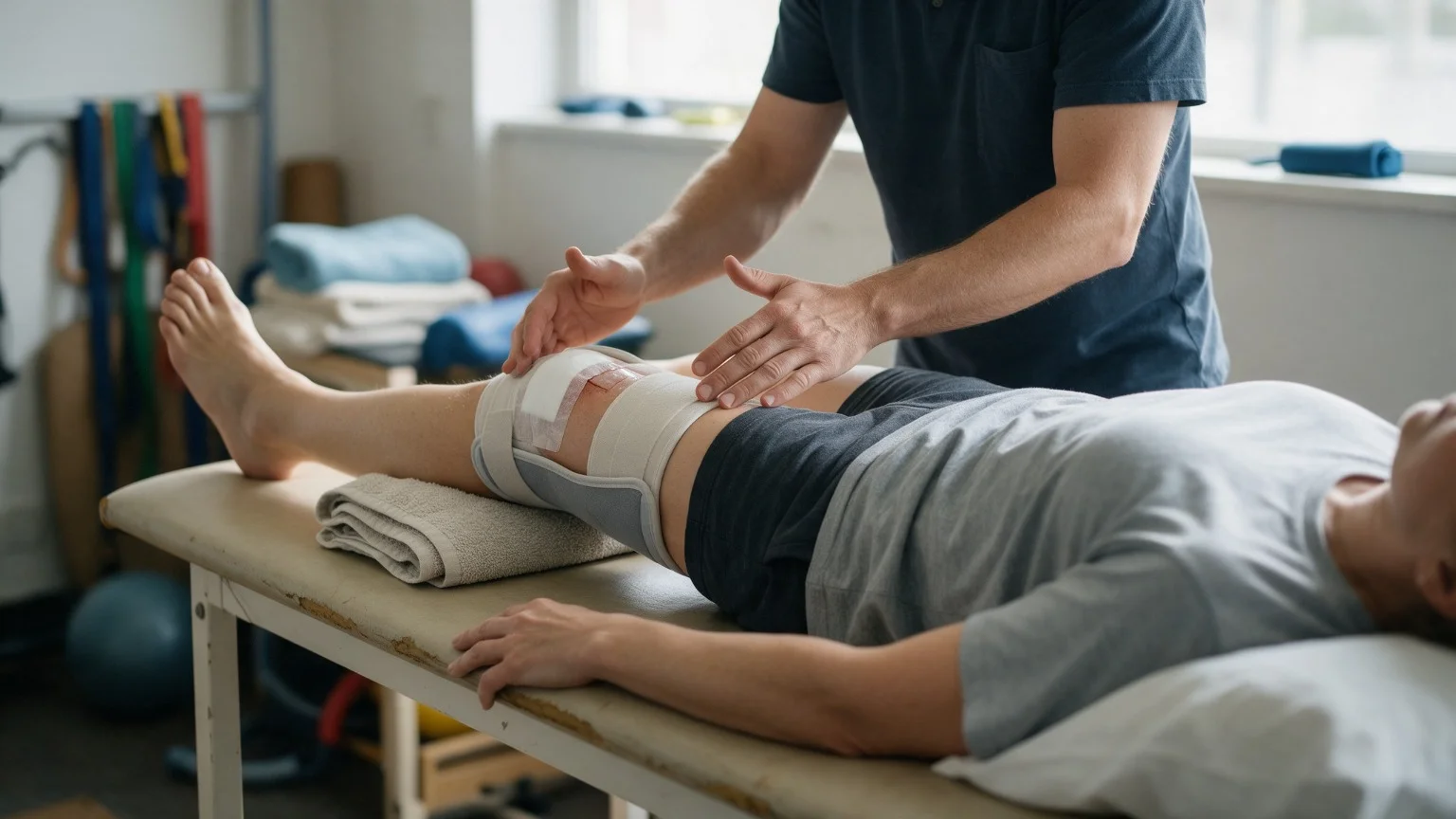
Total Knee Replacement : After a total knee replacement, rehabilitation may begin early in the recovery period with appropriate exercises, mobility work and supported walking introduced according to the surgical and rehabilitation plan. Restoring appropriate knee movement and gradually improving walking ability may be key parts of the early rehabilitation process.
Rotator cuff and shoulder repairs : Rotator cuff and shoulder repairs may involve a protected early phase, sometimes including the use of a sling. Movement is generally introduced progressively according to the surgical protocol and rehabilitation plan.
Spinal procedures: Spinal procedures such as discectomy or fusion can require careful, surgeon-specific rehabilitation guidance, with early rehabilitation potentially focusing on safe movement, walking and functional activities.
ACL and knee ligament reconstructions : After ACL or knee ligament reconstruction, early rehabilitation may focus on areas such as swelling management and restoring appropriate knee movement before progressively building strength and function.
This is why rehabilitation should be guided by the specific surgical procedure, your stage of recovery and the recommendations of your healthcare team, rather than following a plan designed for someone else.
What About Starting Before Surgery?
An important part of rehabilitation can begin before the operation itself. Preparing for surgery beforehand, sometimes called prehabilitation, may help you understand the recovery process, prepare for post-operative movement and work on appropriate strength or mobility where recommended.
Pre-operative preparation can also help you understand what to expect during the early stages of recovery and how movement may be introduced afterwards.
If you already know surgery is coming, it’s worth asking whether pre-operative preparation suits your situation.
How Do You Know If Your Rehabilitation Plan Needs to Be Adjusted?
Recovery does not always progress in a perfectly predictable way. As your activity level changes, your rehabilitation program may also need to be reviewed and adjusted by your physiotherapist or healthcare team. A review may be appropriate if:
- Exercises or movements are becoming more difficult than expected
- Pain or swelling changes as your activity increases
- You are finding everyday movements or activities difficult to progress
- You have new concerns after increasing your activity level
- Your current exercises no longer match your stage of recovery or rehabilitation goals
This does not necessarily mean something is wrong with your recovery. Rehabilitation is often adjusted as your movement, strength, symptoms and functional abilities change.
Your physiotherapist can help determine whether exercises, activity levels or other aspects of your program need to be modified.
When Should You Speak With a Physiotherapist After Surgery?
You don’t necessarily need to wait until you are struggling with your recovery to speak with a physiotherapist. Depending on your procedure and your healthcare team’s recommendations, physiotherapy may form part of your recovery plan from the early stages after surgery.
It may be helpful to speak with a physiotherapist if you are unsure about how to safely progress your movement, regain strength or return to everyday activities. Your rehabilitation plan can then be guided by your procedure, current stage of recovery and individual goals.
If your surgeon or healthcare team has provided specific restrictions or rehabilitation instructions, these should remain an important part of your rehabilitation plan.

How Canberra Physiotherapy Centre Supports Your Recovery
Canberra Physiotherapy Centre provides post-operative rehabilitation tailored to each individual’s procedure, recovery and goals, while working within the recommendations of their healthcare team.
That means your rehabilitation can be aligned with your surgeon’s protocol from the early stages of recovery through to longer-term outpatient rehabilitation.
We regularly support recovery after knee and hip replacements, ACL and meniscus repairs, shoulder reconstructions, ankle procedures and spinal surgery, among others.
You can explore our post-operative rehabilitation page and for appropriate patients, hydrotherapy may also be incorporated into rehabilitation where exercising in water is suitable for their stage of recovery and clinical needs.
Not sure when to start or how to progress after surgery? Our physiotherapists can design a post-operative rehab plan aligned with your surgeon’s protocol. Book your initial post-operative assessment with Canberra Physiotherapy Centre or call us on to discuss your recovery.