What Is Shockwave Therapy? How It Works, Its Benefits and What to Expect
Shockwave therapy is a non-invasive physiotherapy treatment that uses acoustic pressure waves to target specific musculoskeletal conditions. It may be considered for persistent problems such as plantar fasciitis, Achilles tendinopathy and tennis elbow depending on the diagnosis and response to other treatments.
At Canberra Physiotherapy Centre, shockwave therapy may be included within a personalized physiotherapy plan alongside assessment, exercise, manual therapy and rehabilitation.
What Is Shockwave Therapy?
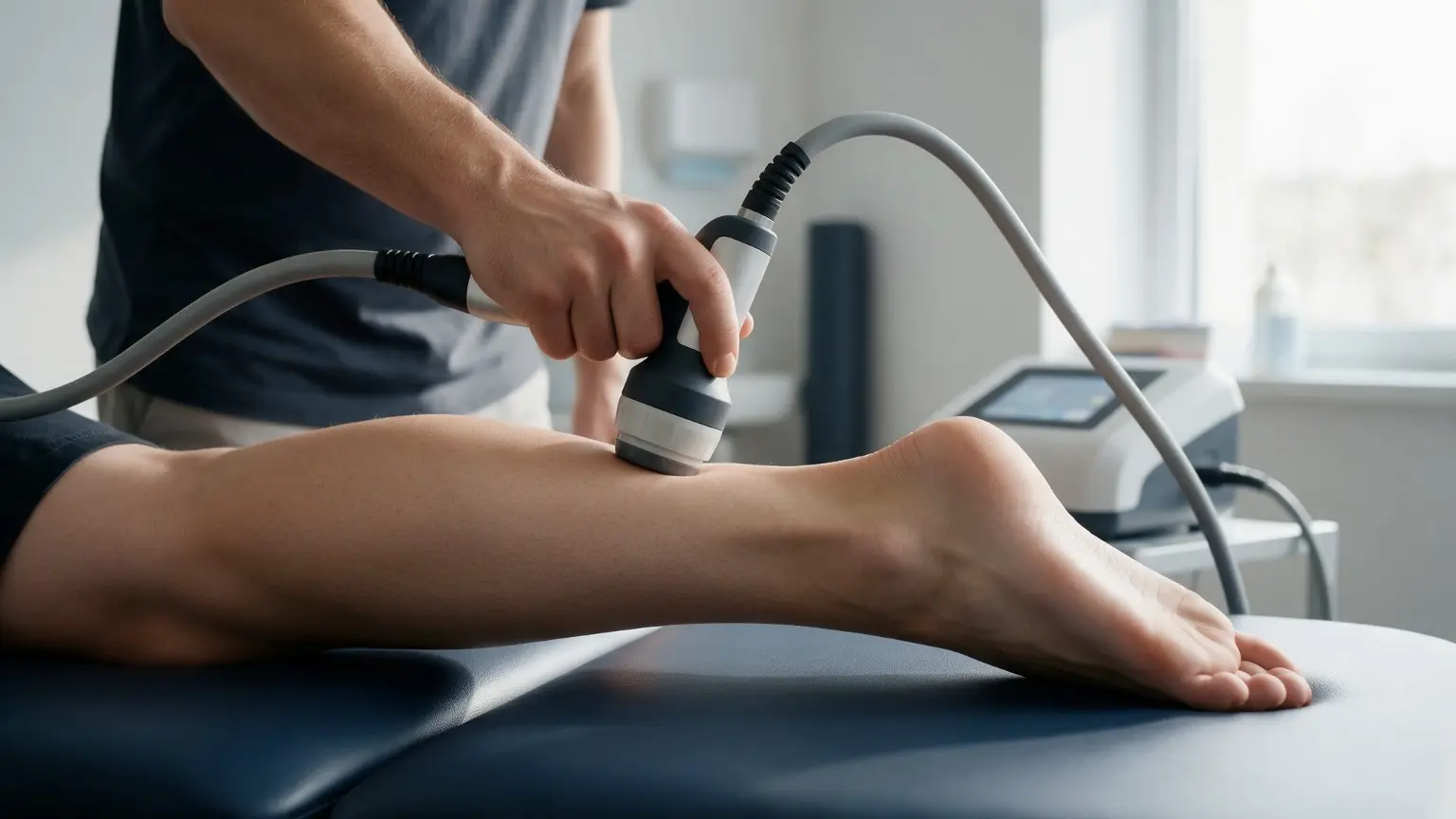
Shockwave therapy (often called extracorporeal shockwave therapy or ESWT) uses a handheld applicator to send short, high energy acoustic pulses into an injured area. Despite the name it isn’t electric.
The shock refers to a sudden pressure wave, similar in nature to sound energy. It’s most commonly used for long-standing tendon and heel pain that hasn’t responded to standard care.
How Does Shockwave Therapy Work?
Shockwave therapy delivers controlled pulses of acoustic energy to a specific treatment area. The exact biological mechanisms are still being investigated but research suggests that these pulses may influence local tissue responses and pain signaling. A typical treatment involves three main steps:
- Assessment: The physiotherapist identifies the affected area and considers your symptoms, medical history and previous treatments.
- Targeted application: A coupling gel is applied to the skin and a handheld applicator delivers pressure waves to the selected area.
- Rehabilitation planning: Your physiotherapist reviews your response and may combine treatment with exercises, load management and advice about daily activities.
The aim is to help manage symptoms and support functional improvement. Shockwave therapy does not guarantee tissue repair or immediate pain relief and its effectiveness depends on the condition being treated.
What Conditions Can Shockwave Treatment Help?
Shockwave therapy is most commonly used for stubborn tendon and heel pain that hasn’t improved with standard care such as load management and exercise.
- Plantar fasciitis and persistent heel pain
- Achilles tendinopathy
- Patellar tendinopathy, often called jumper’s knee
- Calcific tendinopathy of the shoulder (rotator cuff)
- Tennis elbow (lateral epicondylitis)
Key Benefits of Shockwave Treatment
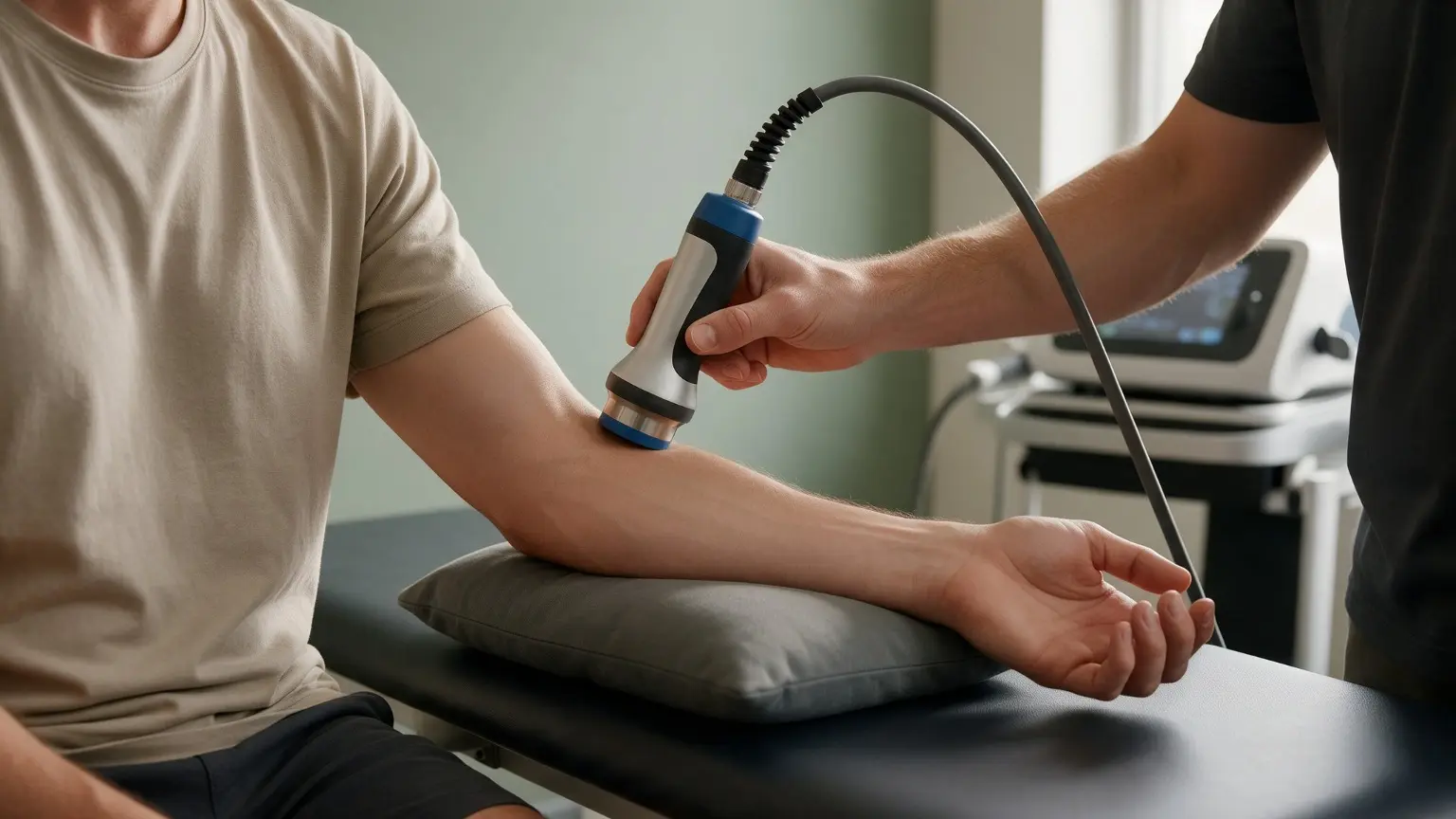
- Non-invasive treatment: It delivers acoustic energy through the skin without surgical incisions.
- Potential pain reduction: May help reduce pain in certain musculoskeletal conditions.
- Short treatment sessions: The application itself is often brief, making it possible to incorporate into a physiotherapy appointment.
- Support for rehabilitation: If symptoms improve, some people may find it easier to participate in their prescribed exercise programme.
- An additional treatment option: It may be considered when appropriate conservative approaches have not provided enough improvement.
For people seeking a pain management clinic in Canberra, shockwave therapy can be one part of a broader, evidence informed plan for persistent pain and reduced mobility.
What to Expect During Treatment
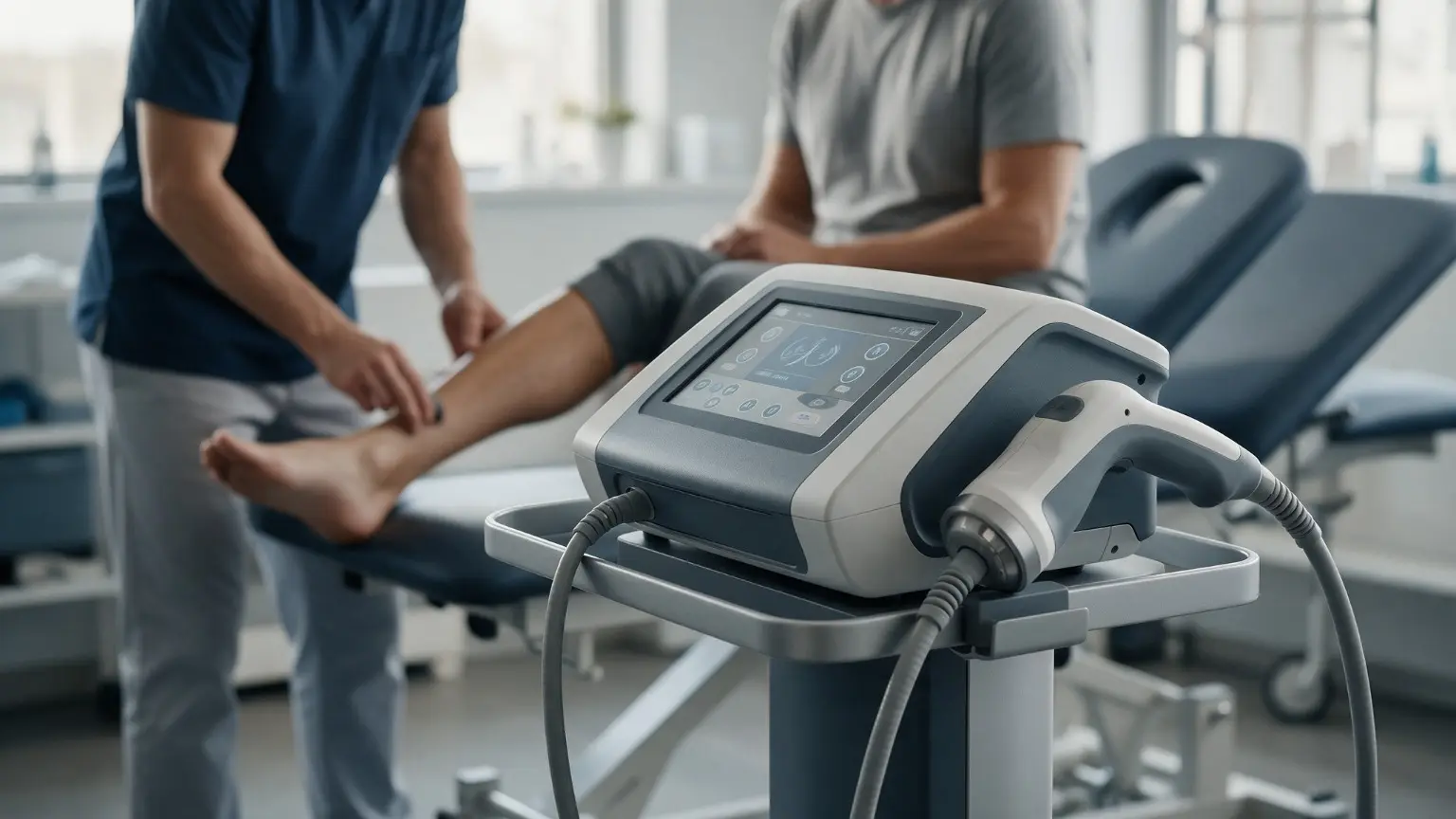
Your first appointment begins with a thorough assessment. Your physiotherapist will ask about your symptoms, medical history, activity levels, previous treatments and goals before confirming whether shockwave therapy is appropriate, during treatment:
- The physiotherapist locates the painful area through palpation and movement testing.
- A gel is applied to the skin to help transmit the acoustic waves.
- The shockwave applicator is moved over the treatment area.
- You may feel deep pressure, tapping or a mildly uncomfortable pulsing sensation.
- The intensity can usually be adjusted to keep the treatment tolerable.
A typical course involves several sessions spaced over a few weeks. The exact number depends on the condition, severity and your response to treatment.
Is Shockwave Therapy Safe? Who Should Avoid It?
Shockwave therapy may not be suitable for everyone. Before treatment tell your physiotherapist about your medical history, medications previous injections and any relevant health conditions.
Certain medical conditions or circumstances may require additional precautions or make treatment unsuitable, depending on the treatment area and type of shockwave therapy used. Your physiotherapist can assess your suitability, explain potential side effects and discuss alternative treatment options where appropriate.
Shockwave Therapy vs Other Physiotherapy Treatments
Shockwave therapy is not a replacement for rehabilitation. It is most effective when integrated into a complete treatment plan. Other physiotherapy treatments may complement shockwave therapy in different ways:
- Shockwave therapy: May help manage pain in certain persistent tendon and musculoskeletal conditions.
- Exercise therapy: Builds strength, capacity and long-term resilience.
- Manual therapy: May improve movement comfort and joint mobility.
- Load management: Helps reduce irritation while maintaining activity.
- Hydrotherapy: Provides low-impact exercise and rehabilitation support.
Is Shockwave Therapy Right for You?
Shockwave therapy may be worth discussing if you have persistent tendon or heel pain that has not improved sufficiently with appropriate conservative treatment. Whether it is suitable depends on the condition, your symptoms and your treatment history. A physiotherapist can assess your needs and discuss appropriate options.
If you are looking for Deakin physiotherapy or a physio in Canberra City , our team provides physiotherapy for a range of musculoskeletal conditions. The team can assess your symptoms and discuss suitable treatment options including shockwave therapy where appropriate.
Book Shockwave Physiotherapy in Canberra
Shockwave therapy can be a useful, non-invasive option for persistent pain but the best results come from accurate diagnosis, appropriate treatment selection and an active rehabilitation plan. A qualified shockwave physiotherapy Canberra provider can help determine whether acoustic shock wave treatment is suitable for your condition.
To discuss whether shockwave treatment in Canberra is right for you, book an appointment with the experienced team at Canberra Physiotherapy Centre.